Sugar Dating in Maryland: Baltimore, Annapolis and the Chesapeake
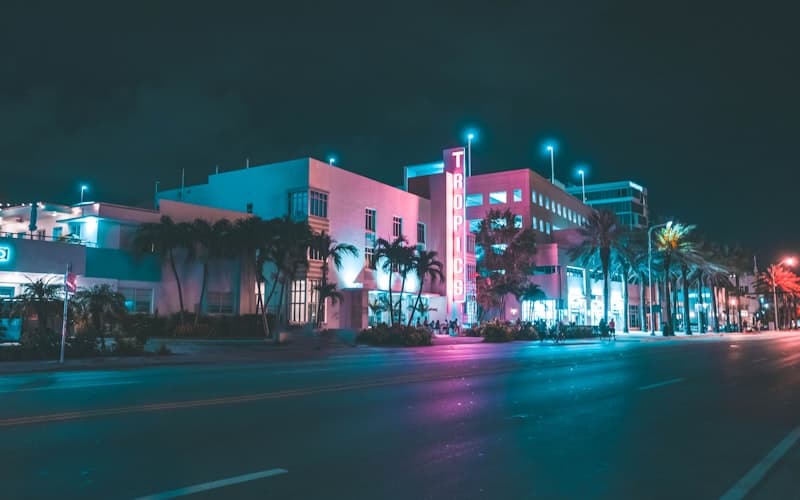
Bottom line: Maryland has no single social center for sugar dating: Baltimore runs on old institutional money in Roland Park and Guilford, Montgomery County (Bethesda, Chevy Chase, Potomac) runs on Washington's federal economy, and the Chesapeake Bay empties both every weekend from spring to Labor Day. Autumn, once the boats come in, is the best season to actually get someone's attention. Work out which of the three a man belongs to before reading anything else.
Nobody Here Can Tell You What the Main City Is
Ask someone here what the main city is and you get a pause, then a question back: main to whom? Baltimore is the largest and it will tell you so. But much of the state's professional money faces the other way, toward a capital that is not in Maryland at all. And then there is the water, which is not a city, has no downtown, and outranks both for every month worth being outdoors in.
That refusal to have a center is the most useful fact about sugar dating in Maryland. Most states orbit one gravitational city. Maryland is organized around an absence, and three separate lives have grown into it: an industrial port city with real old money, a federal suburb answering to another jurisdiction, and a bay big enough to rearrange the calendar of everyone near it.
A man in Guilford, a man in Potomac and a man with a slip in Eastport are three separate propositions that happen to share a license plate. One answers to a family and a set of boards, one answers to a federal calendar, and one answers to the weather. Ask all three for a Saturday and you will get three different answers, only one of which is about you. Our primer on what sugar dating actually is holds the national layer, and everything from here is the Maryland one.
The Washington Half, and the Corridor It Left Behind
Montgomery County is not really in this article, and saying so early keeps the rest of it honest. Bethesda, Chevy Chase and Potomac hold physicians, life sciences executives, litigators and people whose income arrives through a federal contract, and every one of them thinks of Washington as their city. That is the absence at the middle of Maryland made visible: a large share of the state's professional money files its social life under somebody else's capital. This guide treats that as settled rather than arguing with it, and our Washington DC guide is where the Maryland side of the Beltway is actually covered, three jurisdictions and all. Nothing below is written for you.
What sits between the two poles is more interesting than either side admits. Columbia was built on purpose, a planned town dropped into Howard County with village centers and a concert pavilion in the woods. People there work in Baltimore, in Washington, or at a federal installation between the two, so the address tells you almost nothing about where somebody's day happens.
Frederick is an actual old town with a creek running through the middle of it, and people move there specifically to stop driving to somebody else's city. That is why it is the one address in the corridor where nobody's evening has already been spent getting home.
Baltimore Is Not a Suburb of Anything
Everything softens as you go south in this state. Baltimore does not.
It is a working East Coast city of brick and marble stoops, row houses running to the horizon, built around a harbor that still moves cars and containers and coal. It has the accent, the grievance, the humor and the loyalty of a place that was industrial before most of the country was anything, and it has never behaved like an appendix to Washington. Baltimoreans find the comparison insulting, which is worth knowing before you make it on a first date.
The money here was not made this century and mostly cannot be spent at you, because it sits inside endowments, trusts, hospitals and boards rather than in anything visible from the street. Johns Hopkins anchors an enormous medical and research economy. There is an asset management tradition downtown, a spice company up in the valley, an energy company, a sportswear brand on the water, and foundations that have moved money quietly around this city for over a century. The names are already on the buildings: Peabody, Walters, Pratt.
The professional class this produces is educated, opinionated and uninterested in performance, closer in temperament to Philadelphia than to anything in the Washington orbit, and our Pennsylvania guide works that row-house character through at length.
It is a university town several times over too: Hopkins, Peabody, the art college, Loyola, Goucher, Towson, Morgan State. Because those campuses sit inside the same institutional web the money sits in, a Baltimore student is likelier than most to discover that the man across the table sits on a committee that touches her program, and our student guide is written for exactly that overlap.
Roland Park and Guilford Practice an Old Kind of Quiet
Baltimore's real wealth lives north of the city's noisy parts, along a corridor locals can trace without thinking.
Roland Park was laid out as a garden suburb before anybody had used the word zoning: curving roads, deep lawns, shingled houses set back behind hedges. Guilford next door is the grander version, with a sunken garden full of tulips every spring that people drive across town to see and almost nobody who lives there mentions. Homeland is the third. Keep going and you reach Ruxton, Lutherville and Towson, then the Green Spring and Worthington valleys, which are horse country in the literal sense: fences, foxhunting, timber races in spring, farms held in the same families for generations.
The tell up here is not restraint, which every old American suburb performs, but continuity. The man across the table went to the same school his father did, sits on a board his father sat on, and has never once had to introduce himself in this city. So he does not describe his work. He names a building, and he assumes you already know why that answers the question. Missing that is not a matter of taste, it is a failure to hear the sentence.
The corollary matters more. North Baltimore is one continuous social organism: the same families, the same club, the same three restaurants, the same school pickup line. Nobody in Ruxton is anonymous in Ruxton, which is why almost every date that starts up there happens somewhere else.

Federal Hill, Fells Point and the Rooms People Actually Use
The city has a word for its own smallness. People say Smalltimore, constantly, because the professional and social worlds overlap so heavily that a mutual name surfaces before the drinks do. It shapes where meetings land.
Harbor East is the default, and the reason is that hardly anybody in it is from Baltimore. It was built for people arriving on business, so the room does not run the mental index the rest of the city runs. Mount Vernon does the same job with more character, since a coffee near the Peabody or the Walters is the least noteworthy activity available there, and the museums give a daytime meeting somewhere to go afterward.
Fells Point and Federal Hill are the ones everybody names first, and both are wasted on a stranger. Fells Point is cobblestones, working boats and a waterfront that has been one for centuries; Federal Hill has the view back across the water and a loud going-out crowd. Canton is calmer. Hampden, up on the Avenue, is thrift shops and coffee and nobody trying to impress you.
Baltimore forgives a modest venue in a way few East Coast cities do. Steamed crabs on paper over a table, a beer, hands covered in Old Bay, is a respectable evening at any income level here, and a Guilford man who proposes it is telling you where he is from rather than what he is prepared to spend. Read it as geography, not as arithmetic. Our first date guide covers the rest, and the Baltimore footnote is that a crab table is loud, slow and impossible to stand up from politely, so let him offer it once you already want the long version of the evening.
Annapolis Keeps Two Calendars
A short drive south, the state capital runs on a schedule nobody else in Maryland shares.
For one stretch of the cold months the General Assembly is in session, and Annapolis becomes a political town: legislators in rented rooms away from their families, lobbyists working the bars on Main Street and Maryland Avenue, staffers and every trade association in the state. The evenings are social by professional obligation, and the place knows it will empty out.
Then it does, and Annapolis becomes what it actually is, which is a sailing town. City Dock, the narrow channel locals call Ego Alley where boats parade in and reverse back out, the Naval Academy on the point, brick streets running down to the water. Eastport across the creek is the working half: boatyards, riggers, sailmakers.
Two calendars, two populations, and a profile that says Annapolis has told you the town and not the man. A lobbyist in for the session has a compressed, temporary presence and knows it. A man who keeps a boat here organizes his life around water, weather and weekends, and assumes you understand that a good forecast outranks a dinner reservation. So ask whether he is here for the session or here for the boat. Everything else in Annapolis follows from which.
The Bay Reorganizes the Summer
Here is what makes Maryland unlike its neighbors. The Chesapeake is not a feature of the state, it is a second state laid on top of the first, and from the first warm weekend until well after Labor Day it takes precedence over everything.
Weekends start on Thursday evening. The eastbound lanes at the Bay Bridge become a topic of conversation and a reason to leave work early. Marinas from Rock Hall down to Solomons fill up. People who are perfectly reasonable the rest of the year decline a Saturday dinner because the wind is supposed to be good.
For dating, that changes three things. Weeknights become the entire city market, because the weekends are gone. Anyone with a boat becomes harder to reach and easier to spend real time with, since a day on the water is measured in tides rather than in hours. And a great many invitations stop being restaurants and start being logistics.
Our summer sugar dating guide covers what a seasonal market does to timing. What Maryland adds is that nobody here is on holiday. They are at an address they own, across the bridge or down the western shore, doing the thing the rest of their year is arranged around, which is why the autumn a Marylander describes as the end of something is the beginning of yours.
Across the Bridge, the Shore Runs on Its Own Clock
There is a point on the Bay Bridge, somewhere over the middle, where Maryland quietly hands you to a different state.
The Eastern Shore is flat, agricultural, tidal and slow, cut by rivers and creeks into a coastline far longer than the map suggests. Easton is its town, with a theater, galleries and a quantity of money that surprises people. St Michaels is the postcard: harbor, inns, the maritime museum, a main street you can walk end to end in minutes. Oxford is smaller and older, reached by a ferry that has been crossing the same river since colonial times. Chestertown is a college town on a river, and Cambridge, Tilghman and Rock Hall are working water towns.
Two populations share it. One has always been here. The other bought a second house in Talbot County and comes down on Friday, and a good portion of that group made their money in Washington or Philadelphia. They are why the Shore matters here at all.
Further south and east, past the farms, Ocean City is a different holiday entirely: boardwalk, high-rise condominiums, families, a summer economy with nothing in common with St Michaels except the state it sits in. The Delaware beaches begin a short drive up the coast, which matters for reasons covered below.
What all of it produces is the invitation. Anyone with a place across the bridge will eventually ask you over for a weekend, and the honest way to hear that is as a proposal about the bridge rather than about him. The eastbound span backs up on a Friday and the westbound span backs up on a Sunday, the roads past Easton go dark early and the coverage goes with them, and Tilghman Island at midnight is not somewhere anybody leaves on impulse. Say yes to the weekend only once you have said yes to the drive, and our weekend getaway guide is how to think about the second one.
Every Slip Has a Neighbor and Every Hull Has a Name
Maryland's privacy problem has nothing to do with journalists or security clearances, which is what the state next door spends its energy on. It is that the places where this dating actually happens were built small and have stayed that way on purpose.
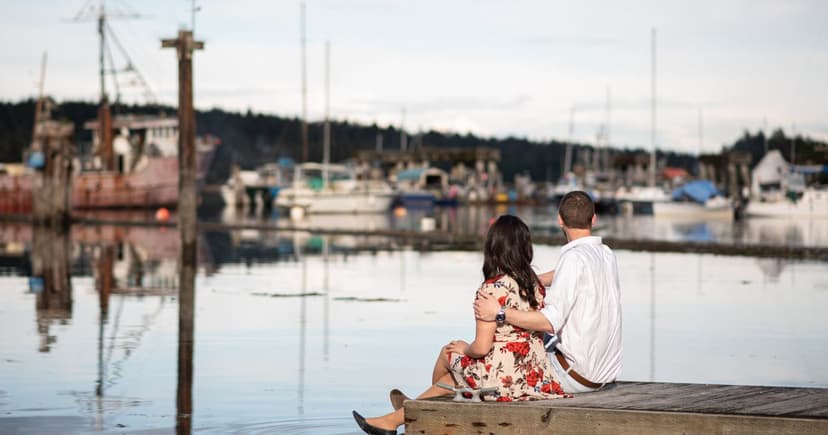
North Baltimore is a village with a city attached. St Michaels and Oxford are villages full stop. Eastport knows every boat in it. A marina is the hardest place in Maryland to go unobserved, and it is not even a room: the same people occupy the neighboring slips every weekend, they are outdoors, and watching who arrives is the entertainment.
None of what follows is intrigue. It is what people who live in small places do without discussing it. Keep moving between Harbor East, Mount Vernon and Canton rather than becoming a regular anywhere, because Baltimore staff remember faces and Baltimore customers know each other. Name the county, never the village. Be careful with photographs on the water, because a boat's name is painted on the transom and a hull is as identifiable as a license plate to anyone who keeps a slip nearby. And on a street with one restaurant on it, walking in at different times is simply how people here keep an evening from becoming an announcement. Our US etiquette guide is the general version, and Maryland's contribution to it is that all of this applies on a dock as well as in a dining room.
One boundary is worth stating plainly. Keeping quiet about whose company you kept last weekend is a courtesy between two adults. Being asked to take money into your account, sit on funds until something settles, buy cards, or repeat something untrue to a bank is not the same species of request and never becomes one. Maryland makes the second unusually easy to mistake for the first, because the props here are institutional: a foundation, an estate, a trust, a name already carved above a door. None of that changes the answer, which is no, followed by a report.
The Local Unit of Value Is a Saturday on the Water
Ask what generosity looks like in Maryland and the honest reply is: in which Maryland. A Hopkins surgeon, a Talbot County retiree, a lobbyist paying for a room he will give up in April and a valley family that has farmed the same acres for generations share no financial habit at all, and a state that never agreed on a center was never going to agree on this. None of it is a rate, none of it is settled in advance, and none of it is anybody else's business. A man who leads with a number has answered a question about himself rather than one about Maryland.
What Maryland does have is a local unit of value, and it is not currency. Here the expensive thing is water, and the genuinely expensive thing is the time to be on it. Days on a boat. A quiet stretch on the Shore out of season, when the inns are half empty and the light is better. Among the Baltimore institutional crowd the same instinct comes out as education, as introductions and as things that outlast the year, which is what a city built on hospitals, universities and foundations would produce.
Our guide to generosity and expectations is how to open that subject without it curdling into haggling. The Maryland note is about timing rather than wording: raise it in July and you are competing with a forecast, raise it in October and the man across the table has just got his whole year back.
Crossing the Bay Bridge Changes Nothing About the Law
Maryland offers one convenience the region next door does not. Washington sits where three legal systems meet, and a short commute can put you under all of them. Maryland is one state with one criminal code from Garrett County to the Atlantic.
Nothing in Maryland law stands between two adults who want to see each other, and a generous one is not committing an offense by being generous. The prohibited conduct is prostitution and solicitation, and what makes conduct prohibited is a specific payment bought for a specific act. The value of a single code is that this sentence is exactly as true on the Ocean City boardwalk as it is on Charles Street, which is not a sentence anyone can write about the region on the other side of the Beltway. Maryland does keep an adultery statute on its books, an antique that almost never surfaces and is not the reason anybody here is careful.
The one geographic wrinkle sits at the bottom of the coast, where Ocean City is close enough to the Delaware line that an evening can start in one state and finish in another without anybody noticing. That is a reason to be clear rather than clever. A sugar relationship is two adults dating where generosity forms part of a real connection, it is not a service and never an exchange of one thing for another, Sugarfar is not an escort service and prohibits offering any service in return for money or other compensation. Which is why the Delaware line is the only border in this article worth a second thought, and why it costs nothing to think about, since two people who would each call the other's company the point are not standing anywhere near the thing either state prohibits. Our legal overview for the United States is where the other codes are compared. This article is general information rather than legal advice, and a question with a real name and a real date attached belongs with a lawyer admitted in Maryland.
A Boat Is Not a Public Place
Our US safety guide is the whole argument, and this section assumes it. Maryland earns a section of its own only because three of the loveliest things about the state are also the three ways a person quietly loses the ability to end an evening.
The first is the boat. A day sail sounds like the most charming invitation in the state, and it is also an enclosed space you cannot leave, with somebody else deciding when it returns to the dock. That is not a first meeting. Neither is a marina after dark, nor a house on a creek at the end of a private road.
The second is distance. The Eastern Shore is farther than it looks, the back roads are dark and empty, coverage is patchy, and the bridge can turn a short drive home into a long one on the wrong Sunday. Anywhere past Kent Island, arrange your own way back before you go.
The third is the local scam, and Maryland's version is unusually well cast. A port state hands a stranger a whole vocabulary that sounds like work rather than like a story. A contract on a vessel, an assignment overseas that keeps getting extended, a maritime settlement stuck in process: each explains, plausibly and endlessly, why he cannot meet yet. Then something needs moving through your account. The Baltimore variant is the institution, a claimed Hopkins appointment or a foundation role, which sounds unimpeachable and costs nothing to invent. The test is his to pass, not yours to make allowances for. Boats have phones and marinas have signal, so a man who will not put his face on a screen while giving discretion as the reason has explained nothing at all. Keep the conversation inside Sugarfar until the two of you have shared a table, and our scams and red flags guide shows how the rest of the machinery is built.
Ask What Someone Does in August
There is one question that does the work of every paragraph above, and it has nothing to do with money or an address.
Ask where somebody is in August. A man who says Baltimore and does not much mind the heat lives a city life and is around on weekends. A man who says the Shore, or a slip, or that he takes the boat down to Solomons, has organized his year around the water, and you will be fitting into that rather than the other way round. A man who leaves the country because the humidity is unbearable is very likely on the Washington side.
Three answers, three different Marylands. August is the one month people answer honestly, because nobody thinks it is a question about them.
The state's lack of a center is usually called a weakness. For this it is the opposite. Three separate second lives give you three different ways to be somewhere nobody is looking, and a bay big enough to make everyone's summer negotiable is also big enough to hold something slow and private between two people with no interest in being noticed.
Frequently asked questions
Is Maryland a good state for sugar dating?
It is, but Maryland answers to no capital of its own, and that absence is the thing to build on rather than around. Baltimore is a genuine East Coast port city with its own old wealth, its own institutions and no interest in the federal government. The Montgomery County side is a Washington economy wearing a Maryland address. And the Chesapeake is a third thing entirely, a body of water that takes the whole state outdoors for months and empties the cities every weekend. Nothing learned in Roland Park transfers to a slip in Eastport, and a state with no center will never tell you which of the three you have wandered into. Work that out first and the rest of Maryland becomes legible.
Where do sugar dates in Baltimore usually happen?
Harbor East and Mount Vernon carry most first meetings, the first because the hotel bars there exist for exactly this and the second because a coffee near the Peabody or the Walters is the least remarkable thing in the neighborhood. Fells Point and Federal Hill work better once you already know him, because cobblestones and a waterfront crowd make an evening hard to end briskly. Hampden is the informal option. What everyone underestimates is how few institutions this city actually has: the same hospital, the same boards, the same foundations, so a room you use twice is a room where somebody's colleague eventually finds you.
Is sugar dating legal in Maryland?
Yes, and the useful part for Maryland is that the answer does not change anywhere inside it. Two adults may see each other, and a generous one commits no offense by being generous. Prostitution and solicitation are the prohibited conduct, and what makes conduct prohibited is a specific payment bought for a specific act. Because Maryland is a single criminal code rather than the patchwork the region next door lives with, the Bay Bridge and the drive to Ocean City move nothing, though that beach sits close enough to Delaware that an evening can finish under another state's rules. This is general information rather than legal advice.
Does sugar dating in Maryland mean going into Washington DC?
Only if you live in the lower half of the state. Bethesda, Chevy Chase, Potomac and the rest of Montgomery County run on federal contracting, lobbying, law and the life sciences corridor, and the people there think of Washington as their city, not Baltimore. If that is your part of Maryland, the market you are actually in is Washington's, and the guide written for it is the one that will help. North of the Baltimore-Washington Parkway, almost nobody goes into the District for a drink, and suggesting it reads as an odd amount of travel to ask for.
When is the best time of year for sugar dating in Maryland?
Autumn, and it is not close. The bay holds its warmth, the boat shows fill Annapolis, the Eastern Shore is at its best, and the people who spent the summer on the water are suddenly reachable on a Wednesday. Summer does the opposite: from June the Chesapeake claims the weekends outright and Baltimore becomes a Monday-to-Thursday city. Winter is quiet everywhere except Annapolis, which fills with legislators and lobbyists for one stretch of the cold months. Early spring is slow until the first warm Saturday, when the whole state goes outside at once.

The Sugarfar editorial team
Every guide on this blog is written and maintained by Sugarfar's own editorial team. We work on the platform every day and update the articles whenever features or rules change.
Ready to try sugar dating?
Create a free profile on Sugarfar and meet like-minded people. It takes less than 2 minutes.
Create free profile