Sugar Dating in Montana: Who Is From Here and Who Just Arrived
In short: Montana asks how long you have lived there before it asks anything else, and the honest answer, stated once without inflating it, works better than performing localness. Bozeman holds newer money from tech, medicine and construction with an ordinary weeknight rhythm, while the Flathead around Whitefish runs older, quieter and heavily seasonal. Name your town, not the state, and let generosity stay unspoken until there is something real to attach it to.
The First Thing Montana Reads Is Not Your Face
In most states, the opening read on a stranger is what they do and how they look. Montana runs a different test first, and it runs it inside two minutes. How long have you been here.
That is not small talk. It is placement. Everyone here sits somewhere on a scale whether they asked to or not, and it runs from born here, through came for school and stayed, through moved out a few years ago, all the way to owns a house here and sleeps in it a few weeks a year. Where you land changes how your sentences get heard, and it especially changes the ones about money.
The scale got sharp recently. Montana has been discovered before, by copper, by the railroads, by the Forest Service, by people leaving California in the nineties. What happened in the last decade was different in kind, because income arrived without the job attached. Work that pays a coastal salary stopped requiring a coastal address, a television series taught the country to want a ranch, and a state with mountains, no sales tax and an unusually good story about itself turned into a plausible place to put both.
So the friction is the water you are dating in. Nothing about what a sugar relationship is changes at the state line, and our complete US guide to sugar dating still describes it accurately here. What changes is that two subjects, where you come from and what money you have, arrive pre-loaded in Montana in a way they do not in Ohio or Maryland.
What Outside Money Actually Bought
It bought houses, mostly, and that is why the resentment has an address.
A ranch that used to be a business became an amenity. A cabin that used to be a cabin became a nightly rental. A three-bedroom in a Bozeman neighborhood where teachers lived priced itself out of reach of the teachers who used to live in it. None of that required anyone to behave badly, only a lot of people with outside incomes wanting the same finite thing at once.
The other half of the arithmetic is that Montana wages stayed Montana wages. The nurse, the framer, the line cook, the wildland firefighter and the person on the front desk at the resort all still get paid what this state pays. So the grocery store in Bozeman or Whitefish now holds two entirely different income systems, in the same line, having what looks like the same day.
Both sides are irritated and neither is a villain. The newcomer is tired of being blamed for a market he arrived into. The local is tired of hearing the place is better now from someone who was not here when it was cheap. You will meet both, and how you talk lands inside that argument whether you meant it to or not.
Performing Localness Is the One Move That Never Survives
So answer it straight. The single most reliable mistake newcomers make in this state is performing localness, and it never survives contact.
The follow-up questions are specific and automatic. Which high school. What year did you come. Who do you know. Somebody who has been here eighteen months and talks like they built the town gets found out in one exchange, and what they have really revealed is that they will shade the truth when it flatters them. That is a far worse thing to learn about a person than a recent move date.
The version that works is boring. I moved here three years ago for a job, I am from Ohio, I love it and I know I am part of what changed it. Newcomers who say that get treated as newcomers, which is fine. Newcomers who claim more get treated as liars, which is not.
Locals have a mirror version of the trap. Contempt for transplants is an understandable feeling and a terrible personality on a dating profile, particularly where a great many of the men reading you moved here recently and know it. Being from here is worth stating once. It is not an argument.
Both are the same skill, which is describing yourself accurately enough that the person across from you can decide, and that skill is most of our guide to finding a sugar daddy in one paragraph. If you are new to this and not only new to Montana, start with the beginner's guide and come back.
Bozeman Is Where Both Montanas Share a Sidewalk
The Gallatin Valley is the pressure point, and it is where most of this actually happens.
Bozeman has the university, an airport that long ago outgrew what a town this size would normally support, Bridger Bowl up the road and Big Sky an hour down the canyon. It has an optics and engineering cluster that quietly employs a lot of people with doctorates, a software scene old enough that some local equity has already turned into local money, a hospital, and a construction industry that got wealthy building everything the newcomers wanted.
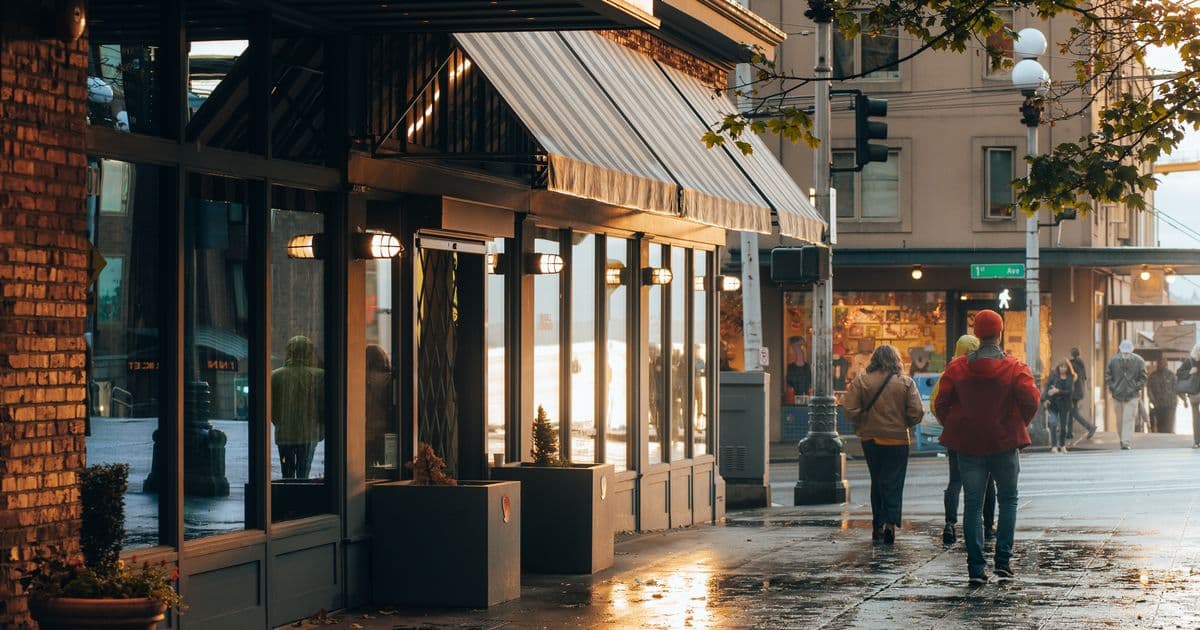
On a Friday, Main Street holds all of it at once. Graduate students on a budget, a framing crew that started at six, a couple who sold a house in Seattle, and a man whose family has run cattle south of Belgrade since before any of the rest existed. That mix is why Bozeman feels charged in a way Missoula and Billings do not.
For a first meeting it is an easy town. Coffee downtown in daylight is unremarkable, the museum on the campus edge is a real venue rather than a fallback, the summer farmers market is public enough for anyone, and a brewery at six is the local default for something warmer than coffee without committing to dinner. How long that first hour should run and how to end it cleanly is worked through in our first date guide, and Bozeman hands you every venue you need to follow it.
East over Bozeman Pass, Livingston is the valley's release valve: cheaper, windier, stranger, full of writers, guides and people who left Bozeman on purpose. Beyond it, Paradise Valley runs south toward Yellowstone with some of the quietest money in the West sitting on both sides of the river, invisible from the highway and intending to stay that way.

Big Sky Is a District, Not a Town
An hour south of Bozeman through the Gallatin Canyon, the rules change again, and the first thing to understand is structural. Big Sky is not an incorporated city. There is no mayor and no city hall, just a resort community spread across two counties, funded in part by a local resort tax, with a mountain in the middle of it.
That produces the sharpest division in Montana. The people who own here and the people who work here do not share an economy, do not keep the same hours and increasingly do not sleep in the same valley, since much of the workforce commutes up the canyon from Bozeman and Belgrade in the dark. Add the Yellowstone Club on the ridge behind it, a private members community where discretion is a professional standard rather than a preference, and some of the wealthiest men in the country are also the least visible.
What that means practically is that Big Sky arrangements are trip-shaped. He is here for a week at Christmas, a stretch in March, part of the summer. Nothing about that is dishonest, but it is a different relationship from one built on ordinary Tuesdays, and it works far better when both people say so out loud early. Our weekend getaway guide is written for exactly this shape, and the same seasonal logic plays out on Colorado's resort corridor, described in our Colorado guide.
If you are one of the people working here rather than visiting, guard your independence carefully. Seasonal housing in this valley is tight enough that accepting somewhere to live from a man you have known for a month can quietly become the reason you cannot leave.
The Flathead Keeps a Summer Address and a Winter One
Up in the northwest corner, the same rediscovery happened with a different accent.
Whitefish is the polished one: a walkable Central Avenue, a mountain above town, a lake below it, Glacier an easy drive east and a train that stops downtown on its way between Chicago and Seattle. Kalispell is the working town that holds the hospital, the airport, the county offices and the jobs. Columbia Falls sits between them, Bigfork sits pretty on the far shore, and lake houses ring the water in every direction, a great many of them dark from October to May.
The money here reads older than Bozeman's. Less software, more retired, inherited, medical or entertainment, usually attached to a second home a family has owned for two generations and a very expensive boat. It is also less defensive, because much of it arrived long enough ago to have stopped counting as new.
The Flathead's real variable is the calendar, and it is brutal in both directions. In July the valley is full, everyone in hospitality is working every day, and a woman with a summer job here has no free evenings at all. In late spring and late fall the towns empty out until restaurants close for weeks and it is hard to find anywhere open on a Tuesday. An arrangement that started at the height of August has to survive a November when neither of you can find anything to do, and the ones that manage it are the ones that named the season in advance.
Missoula Settled Its Identity Before the Money Came
Missoula sits at the other end of I-90 and has spent thirty years making a point of not being Bozeman.
It is a university town first, built around the Clark Fork, the Hip Strip and a mountain with a letter on it. It remembers being a mill town and it has the politics, the bookstores and the music calendar of a place that settled its identity long before anyone moved here for the scenery. It got more expensive too, but it drew fewer second homes and more people who actually work here, so the resentment runs cooler.
That makes it the easiest city in the state for a slow, ordinary, unremarkable build. It also has a large student population, and if that is your situation, the money side deserves its own reading in our student guide first.
East of the Divide the Tenure Test Barely Applies
Then there is the Montana that was never for sale, and it is most of the map.
Billings is the commercial center and the trade hub for everything east of the divide, running on refining, agriculture, medicine and the freight between them, with wealth built on land, cattle, energy services, dealerships and hospitals. Helena is government and law, a capital where the people who quietly run the state have known each other for thirty years. Great Falls has the Missouri and an Air Force base, which puts a slice of the local dating pool under military rules civilians consistently underestimate.
Advice written for Bozeman misfires badly out here. A man in Billings is not defensive about being from somewhere else, because he is not from somewhere else. He will not perform modesty about his truck and he will not treat the housing market as a moral question. The tenure test barely applies, because everyone passed it a generation ago.
Talking About Money Where Money Is the Grievance
Now the part everything above was setting up.
In a state where a lot of people watched what they pay for a two-bedroom go somewhere they could not follow, raising generosity carries weight it would not carry in Dallas. Open with a list of wants and, fairly or not, you have cast yourself as one more person treating Montana as an amenity. Avoiding that costs you nothing, since leading with wants is bad practice everywhere.
The opposite failure is more common and does more damage. Montanans of every tenure are conflict-averse about money in a way that reads as politeness and works as evasion, so two people can spend six weeks being warm at each other without either one saying what they are looking for. Vagueness is expensive in a state where the next date might be a two-hour drive. Say the shape of what you want, early, and let him say his.
Read the signals carefully, because Montana scrambles them on purpose. A newcomer with real means will often drive a filthy truck and wear the same jacket for a decade, precisely because he does not want to be the guy who bought the valley. A man who very much wants to look like he bought the valley may be leveraged to the eyebrows. Neither the truck nor the jacket tells you anything.
What generosity looks like here takes shapes the place suggests: tuition in Bozeman or Missoula, a season pass, tires that will get through February, the flight home at Christmas, the difference between a room in a shared house and somewhere of your own. Our guide to allowances works through how that gets discussed, and our etiquette guide covers the tone. Figures do not belong anywhere in it, and a man who opens with one is describing a transaction rather than a relationship.

Montana Gossips Along the Interstate
The state is enormous and the social network is not. That combination catches people out constantly.
Missoula, Butte, Bozeman and Billings are beads on one interstate, Helena and Great Falls hang off another, and the professional classes in all six know each other. Doctors moved between those hospitals. Lawyers went to the same law school in Missoula. Contractors bid against each other in two valleys. Kalispell and Whitefish are one social circle wearing two costumes. A story that starts on a Friday in Bozeman can be in Billings by Sunday without anyone intending harm.
There is also the vehicle problem. In a small Montana town people know trucks the way city people know faces, and a strange rig parked overnight in the same driveway twice is information. That is not paranoia, it is how a place with few cars and long sight lines works.
Concealment is the wrong answer, because concealment fails here and fails loudly. What works is making sure the true version of events is boring and sayable. You are seeing someone. You met on an app. You had dinner. That survives being repeated by a stranger. An elaborate cover story does not, and in a town this size the lie is what gets found, not the dinner.
So choose where you are affectionate, keep it off social media while it is new, and do not post a location in real time from a town where half the people scrolling will recognize the wall behind you.
The Drive Is Part of the Date
Everywhere else the logistics are a footnote. Here they are half the plan, and they are also half the safety.
Distances are long, the passes are weather, and cell coverage disappears in the canyons for stretches long enough to matter. Elk and deer own the highway at dusk. In February the road can be fine in town and glass twenty miles out. In August the smoke arrives and cancels anything outdoors with no notice at all. All of that gets priced into any plan involving two people in different valleys.
Geography also changes what a precaution is worth. Your own keys are your exit, and in Montana the alternative to your exit is standing on a shoulder with one bar of signal, so drive yourself until you genuinely know the person. Keep first meetings inside a business with staff and other customers, in town, in daylight, and well away from a trailhead, a boat ramp, a cabin or a gate at the end of a private road. Give one specific person the town, the venue, his name and roughly when you expect to be back, and update them if the plan moves.
Then there is the sentence this state produces more than any other: let me pick you up, it is such a long way. It sounds like courtesy and it would leave you without a car, two hours from home, in the dark. Our safety guide has the full checklist. Montana's contribution is that every mistake on it is compounded by distance, so the margin for optimism is thinner here than almost anywhere.
The Pitch That Only Works in a Boom
Boom states attract a particular kind of fraud, and Montana gets the full menu.
The signature version leans on the state's own geography to explain an absence. He is running a project at a remote site, he is out on a ranch with no service, he is at a mine, he is flying between valleys, and that is why he cannot do a video call, cannot meet for another month, cannot be anywhere you could check. Every one of those sentences is plausible in Montana, which is why they get used here and why absence is the thing to test rather than excuse.
The second version is dressed as opportunity. A land deal, a development going in outside town, a mineral play, a crypto position, presented as something a generous man wants to bring you into. The tell always arrives eventually: you are asked to receive money, forward money, hold money, open something in your name or move funds for someone else. There is no legitimate version of that request from a man you met online. It ends the conversation, and it is worth reporting rather than simply walking away from.
Then the ordinary ones, which a slow and polite small-town rhythm makes easier to miss: gift cards, a wallet lost on the road, a card frozen by the bank, an emergency arriving exactly when you were about to meet. Our scams and red flags guide catalogues the whole family. Get a live video call before anything else happens, and let a refusal be the answer.
One Jurisdiction, and the Boom Never Moved It
Montana is a single state code from the Idaho line to North Dakota, which makes this simpler than in metros that straddle borders.
Nothing in Montana law prevents two adults from dating, and nothing prevents one of them from being generous. What Montana prohibits is prostitution and patronizing it, meaning an agreement to exchange a sexual act for money or other consideration. That prohibition does not soften in a resort district and does not tighten in a county seat. It reads the same in Whitefish and in Miles City, and no amount of new money created a local exception anywhere.
The line worth internalizing is this: a sugar relationship is two adults dating where generosity forms part of a real connection, it is not a service and never an exchange of one thing for another, Sugarfar is not an escort service and prohibits offering any service in return for money or other compensation. Keep the connection real and keep the generosity uncoupled from any specific act, and you are on the correct side of a distinction that matters. If a conversation starts sounding like a transaction, end it rather than renegotiate it.
Airmen at Malmstrom near Great Falls carry an extra layer, since the military code reaches private conduct in ways civilian law does not, and a man in uniform has more to lose from an ambiguous arrangement than he usually admits. How other states word the same distinction is compared in our US legal overview. All of this is general information rather than legal advice, and a specific question deserves an hour with an attorney licensed in Montana.
Say Where You Are From
Montana is going to place you whether you help it or not, so do the placing yourself.
Name the town rather than the state, because Livingston, Belgrade, Columbia Falls and Kalispell each mean something precise to anyone local while Montana means nothing to anyone. Attach the true tenure to it. The year you came and what brought you, or four generations in the same valley. Say it once, without apology and without inflation, and let it sit there.
That is not an unromantic way to begin. In a state where everybody currently suspects everybody else of performing something, being unglamorously accurate about who you are and where you came from is the shortest route to being believed. The boom changed the price of a house and it changed how much a stranger's story is worth. Only the second of those is in your hands.
The rest is two people, a calendar and a long drive. Set your Sugarfar profile up to say the true thing, and let the state do its sorting.
Frequently asked questions
Why does it matter where I say I am from in Montana?
Because the state sorts people by tenure before it sorts them by anything else, and it does it in the first two minutes. The scale runs from born here, through came for school and stayed, through moved out recently, to owns a house here and sleeps in it a few weeks a year. Where you land changes how everything else you say gets heard, money included. You cannot opt out of being placed, so place yourself accurately. Newcomers who state the year and the reason plainly do fine. The ones who perform localness get caught, usually within a single follow-up question.
Is Bozeman or the Flathead better for meeting someone?
They hold different men. Bozeman and the Gallatin Valley concentrate newer money: software equity, optics and engineering, medicine, construction that got rich building for everyone else, plus a university and an airport that keep people cycling through. The Flathead runs older and quieter, more retired, inherited or entertainment money attached to a lake house, and its calendar swings harder between a crowded summer and a very empty spring. Bozeman supports an ordinary weeknight rhythm. Whitefish and Bigfork tend toward the seasonal and trip-shaped. Pick the one whose clock matches the life you actually have.
Is sugar dating legal in Montana?
Dating is legal in Montana, and so is being generous to someone you are dating. What Montana law prohibits is prostitution and patronizing it, meaning an agreement to exchange a sexual act for money or other consideration. Montana is a single state jurisdiction, so the rule reads the same in Whitefish as it does in Miles City, and the boom did not create a local exception anywhere. Airmen stationed at Malmstrom near Great Falls also live under a separate military code where private conduct can become a career problem. This is general information about Montana, not legal advice.
How do I bring up generosity without sounding like I am cashing in on a housing crisis?
Raise it after there is something real to attach it to, and raise it as a shape rather than a shopping list. In a state where a lot of people watched their rent leave them behind, opening with wants reads as one more outsider treating the place as an amenity. Talk about the practical form your life takes here: tuition, a season pass, the drive, the winter, the flight home at Christmas. Never name a figure and never let anyone name one to you. If the conversation turns into a price list, it has stopped being dating.
What does the Montana calendar do to an arrangement?
It swings it twice a year. Summer belongs to work in the tourist towns and to daylight everywhere else, so the Flathead and Big Sky fill with people who have no free evenings until October. Shoulder season empties those towns out to the point where restaurants close for weeks. Winter is genuinely good for dating in Bozeman, Missoula, Billings and Helena, where people are home and looking for something to do, but it makes every drive a decision. August adds smoke, which cancels outdoor plans without warning. Expect the rhythm to change rather than the interest to fade.

The Sugarfar editorial team
Every guide on this blog is written and maintained by Sugarfar's own editorial team. We work on the platform every day and update the articles whenever features or rules change.
Ready to try sugar dating?
Create a free profile on Sugarfar and meet like-minded people. It takes less than 2 minutes.
Create free profile