Sugar Dating in Kentucky: Derby Week, Horse Farms and Bourbon

Short answer: Sugar dating in Kentucky runs on the state's horse-industry calendar rather than on the city you live in: Derby week is weeks of private dinners, farm parties and barn breakfasts that decide who is inside long before the race itself, and Lexington's agricultural horse money rarely mixes with Louisville's distilling, insurance and legal money. Set your location to whichever city you sleep in, learn that Thurby and Oaks Friday matter more than Saturday, and treat any farm invitation as a trip that needs your own car.
The Commonwealth Keeps a Literal Season
Kentucky's season is not a mood and it is not a party circuit. It is a working timetable that belongs to an industry, and the rest of the state has agreed to live by it: a calendar nobody voted on, a dress code grown adults genuinely worry about, and at the end of it a public spectacle the people who caused it barely stop to watch.
Outsiders picture a horse race on a Saturday. Kentuckians experience weeks of dinners, barn breakfasts, barrel picks and galas, almost none of it sold to the public or listed anywhere, after which everybody knows precisely who was inside and who watched the coverage from a sofa. That sorting is what sugar dating in Kentucky actually turns on, and the encouraging part is what the sorting runs on: here an invitation is a working credential rather than an inherited one. It follows what a man does for the industry, not what his grandfather did.
The second fact is that the money is not one substance. Lexington's fortune grows out of land and bloodlines, Louisville's out of warehouses, hospitals and a river port, and the two mix far less than the postcard suggests. Our complete US guide to sugar dating covers the part of this that would be true in any state. The part that is only true here is that the door is a calendar, and the calendar belongs to horses.
Derby Week Sorts People, and the Sorting Happens Off the Track
The festival opens weeks ahead of the race with fireworks over the Ohio, after which Louisville fills with things anybody can attend: a parade, a steamboat race, chow wagons on the waterfront. That layer is cheerful and completely uninformative about anyone's standing.
Underneath runs the part that counts. Private dinners in Cherokee Triangle. Farm parties in Woodford County that begin in the afternoon. Trainers' dinners. The Barnstable Brown Gala on Oaks night, the one outsiders have heard of and therefore the least revealing of the lot. Morning workouts at Churchill Downs, free and finished before the city wakes, where the people who actually own horses stand at the rail in fleece jackets.
At the track the hierarchy is printed on a badge and worn on a lanyard, which makes it unusually easy to read. The infield is young, soaked and cannot see the race. The grandstand is the honest middle. Above it sit the Turf Club, Millionaires Row and rooms that require somebody to bring you. Where he watches from is therefore a fair thing to ask out loud, and men here answer without flinching, because the badge around their neck said it first.
Two days do most of the work. Thurby, the Thursday, is the locals' day, before the visitors land. Oaks Friday is Kentucky's own race day and a native will defend it as the better card. Saturday belongs to the world. So the thing to notice is not whether he goes, because everybody goes. It is whether Thursday and Friday mean anything to him, and whether his week came from people or from a ticket site.
Two Fortunes That Share a State and Almost Nothing Else
Lexington money is agricultural money in good boots. It answers to weather, veterinary bills, foaling charts and a sales ring, and much of it is not local: Irish, English, Japanese and Gulf ownership sits behind farms with old Kentucky names, so the people you meet in town are the managers, agents, vets and syndicate members who run those places rather than the principals who own them. The culture is early, practical and quietly obsessed. A Lexington man ends the evening at a reasonable hour because something is happening in a barn before dawn.
Louisville money is urban and industrial: distilling held inside families for generations, health insurance, an air freight hub that runs all night and gives the city a genuine third shift, law firms, hospital systems and the boards attached to them. It keeps city hours, sits on committees, and understands itself as a river town facing Indiana rather than as part of horse country.
The circles overlap at Keeneland, at the Derby and at a couple of charity nights a year. Otherwise a Louisville lawyer and a Woodford County farm manager can live an hour apart for decades without sharing a table. They are not two ends of one market. They are two employers with incompatible hours, and measuring either by the other's clock produces a wrong answer in both directions: the Lexington man looks unreliable, the Louisville man looks like somebody who has never sat up all night with a mare.
Lexington Answers to a Calendar It Did Not Write
Central Kentucky's year is set by biology, and nobody in it gets a vote.
Every Thoroughbred in the hemisphere shares one official birthday at the start of the year, which pushes foaling into late winter and puts farm staff on night watch for months. The breeding shed follows, from late winter into early summer, and it is relentless. Then the Keeneland meets, one in spring and one in autumn, each only a few weeks long, where the parking is on grass, the clubhouse still wants a jacket and half the horse business stands in the same paddock. Then the yearling sales, the weeks when most of the year's serious money changes hands and the foreign owners behind those farms come back to buy from each other.
What that means practically takes newcomers a season to believe. A man attached to a farm will disappear for weeks, answer at strange hours, and cancel because of a mare rather than because of you. What matters is that this absence keeps no diary. A man with a lake house vanishes on a date you could have looked up and returns on another one; a foaling barn gives no notice at all and gives it in the middle of the night. So the adjustment is not patience in the abstract, it is agreeing early and out loud that a late cancellation costs nothing between you, because that is the only term a mare will honor.
His money is lumpy rather than steady for the same reason, since a farm spends all year in order to sell for a fortnight. Our guide to generosity and expectations is about the conversation itself. The Kentucky variable is not what gets said but when, because a man asked in March is answering out of last autumn's cheque and knows it. Ask once the sales are banked and he has slept.
Paris Pike, Versailles and Midway: Reading a Farm, and Leaving One
Drive north out of Lexington on Paris Pike and the countryside starts performing: hand-rebuilt stone fences, black four board fencing, mile after mile of it, Claiborne Farm at the end in Bourbon County. Go west along Old Frankfort Pike toward Versailles and you get the same landscape with distilleries folded into it and a castle sitting incongruously beside the road. Between them, Midway is one short street with a railway running down the middle, which is exactly why it makes the best low pressure evening in central Kentucky.
Say Versailles the way Woodford County says it, rhyming with sales rather than with France, and compress Louisville the way locals do. Both are free to learn, which is exactly why neither proves anything. The insider currency in this state is not pronunciation, it is whose invitation you arrived on, and that is the one thing here nobody can bluff past a second question.
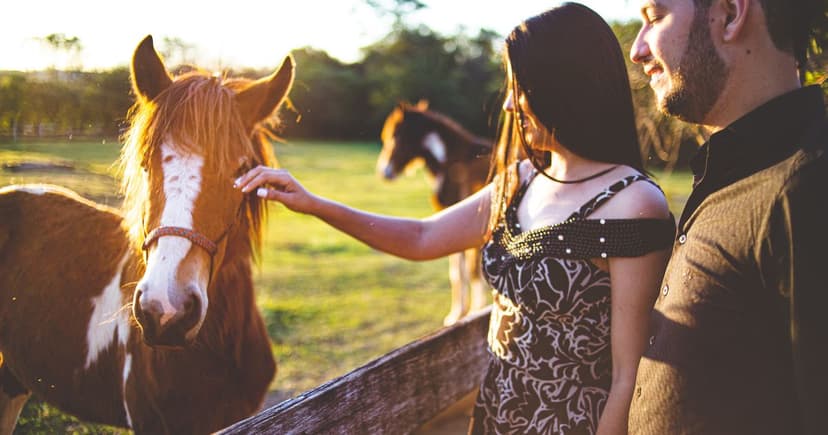
The word farm is where outsiders get lost. It covers a paddock with two retired geldings and it covers a breeding operation with an international parent company. The tell is how a man describes his relationship to the place: owner, breeder, bloodstock agent, farm manager, syndicate member and someone who boards a horse are all different economic positions, and only the first pair mean what visitors assume.
Leaving is the part to plan. A farm invitation is an invitation to somewhere you cannot exit without a car you control, because rideshare thins past the edge of Lexington and vanishes in the counties, signal drops along the palisades of the Kentucky River, and the roads are two lanes with no shoulder, fog in the river bottoms and deer on the asphalt at dusk. Drive yourself, park facing out, and give a friend the farm's name and the road instead of the county, since a Kentucky county is a great deal of ground to search. Keep talking inside Sugarfar's chat until a real name has surfaced, which takes less time here than almost anywhere: the horse business is small enough that one mutual acquaintance settles who somebody is inside an afternoon, so a man hurrying you off the platform is skipping the cheapest check this state offers. Our US safety guide carries the reasoning, and the Kentucky amendment is that the exits are longer than the invitation makes them sound. Our first date guide explains why a first meeting belongs in town rather than at the end of a gravel drive.
Louisville Sorts Itself Along Two Roads
Learn two streets before you learn the map. Bardstown Road runs southeast through the Highlands and is where Louisville eats, drinks and argues. Frankfort Avenue runs east through Clifton and Crescent Hill, older and quieter, better for a conversation you want to hear.
Cherokee Triangle sits beside Cherokee Park, one of the Olmsted parks strung along the city's green parkways, and it carries the most social weight while looking the least like it: Victorian houses under old trees, surgeons and distillery families on the same block. St. Matthews is the comfortable eastern default. Anchorage is the quiet answer, a small incorporated city with its own school district, no sidewalks and horse trails at the back of it, which is Louisville's neatest joke on itself: the city's most discreet address keeps horses and has nothing whatever to do with the horse business. The bluff addresses along River Road, Glenview and Indian Hills and Mockingbird Valley, are the same idea with a view.
Downtown, Whiskey Row handles conventions, and the entertainment block near Fourth Street runs on the distillery-tour trade, which makes it the one corner of Louisville where nobody's reputation is on the table. Occasionally useful, never informative: a man who takes you there has told you only that he does not mind being seen, and in that particular block there is nothing to mind. NuLu, Butchertown and Germantown hold the interesting evenings. Old Louisville, the vast Victorian district beside the university, is student territory, and the local complication is that the medical and dental schools sit in the same few blocks as the hospital foundations that fund them, so a student here can be one introduction away from the man who chairs her department's endowment. Our US student guide is written for exactly that problem.
Louisville does not place people by high school or by street. It asks "what are you doing for Derby," in February, and the answer is a complete social biography delivered in one sentence. Say honestly that you have never had a plan and would like to see it properly. A man with a real one enjoys being asked, because his answer is a list of names and he likes the list. A borrowed answer falls over at the second question, which in this city is always who invited you.
Bourbon Is Agriculture With a Very Long Wait Attached
Whiskey money behaves like farming money that learned patience. Grain goes in, barrels go into a rickhouse, and years pass before anybody knows what they have. That timescale shapes the people: family control across generations, an allergy to hurry, a preference for institutions over gestures.
The visitor layer is the distillery trail through Bardstown, Loretto, Clermont, Lawrenceburg, Frankfort and Versailles. Genuinely enjoyable, and a product. The private layer is the barrel pick, where a group buys a whole barrel, tastes through it and bottles it under their own name. Being asked along to one means somebody in the group decided the group would enjoy you, and that is a different currency from a ticket. It is not inherited, nobody is born onto a barrel pick, and it can be earned inside a single year by being useful and good company.
Which is precisely why the fraud in this state talks about whiskey. Allocated bottles are scarce, and a man who can produce one has relationships rather than merely money, so it is the relationship that gets counterfeited. The giveaway is which way the money travels. A genuine barrel pick costs you an afternoon and your name on somebody else's group order. The invented one wants your money in front: a stake in a barrel, a deposit to hold an allocation, a shipping charge for bottles that stay in a warehouse for the length of the story. Our guide to sugar dating scams and red flags explains why the story never matters and the direction always does. Report the account and stop answering.
The Bridges at Covington and the Commonwealth Past the Two Cities
Northern Kentucky is Kentucky on paper and Cincinnati in practice. Covington, Newport, Bellevue, Fort Thomas and the ridge suburbs around Fort Mitchell look across the Ohio at a skyline that runs their lives. MainStrasse and the levee at Newport make pleasant evenings, but the boards, the parishes and the money are Ohio's, so our Ohio guide is the one to read if you live up there. Nothing about the Derby season reaches that far north.
Bowling Green faces the other way. It is closer to Nashville than to Louisville, its weekends drive south, and its economy is a state university, a plant that builds one famous sports car, and the cave country around it. Read it as the northern edge of the Nashville market and our Tennessee guide becomes more useful than anything written about Louisville.
The rest fills in quickly. Frankfort is a very small capital that swells when the legislature sits, which means lobbyists. Owensboro is barbecue and bluegrass, Paducah is barges and quilts facing west. Lake Cumberland and the Red River Gorge are where the state goes for a weekend, houseboats on one and cabins on the other. Both are lovely, and both break the single rule this article keeps returning to, which is that in Kentucky you keep your own car. A houseboat has no car park to walk back to. A cabin above the Gorge sits at the end of a forest road nobody drives at night for the first time. Settle who is taking you home before either of you packs, and our weekend getaway guide is how that conversation goes.
The Horse World Has Already Had Breakfast
The Kentucky horse business is small in the way that matters, which is that everyone works for everyone. The vet who covers his farm covers the neighbor's. The bloodstock agent buys for rivals in the same week. Farriers, exercise riders, van drivers, consignors and insurance brokers move between operations, and many of them eat breakfast at the same counter at the Keeneland track kitchen before dawn. Information here does not need a rumor mill. It has a commute.
Louisville's version is institutional: hospital foundations, arts boards, the parochial school systems, the festival board, and a downtown club membership that has been in some families longer than the businesses have. Frankfort adds the legislature, where discretion is a professional skill.
So a man who will not be photographed is being practical, and Derby week is the reason. Every party in the season has a backdrop and a wall of raised phones, the pictures go up while the party is still running, and a hat hides nothing above the chin. A man who would rather have Midway on a Tuesday than the Highlands on a Saturday has read his own calendar correctly. Your half is to keep his name and his farm out of anything you post, and to watch whether he does the same with yours before you decide he is careful rather than merely concealed.
There is a point where that stops being courtesy, and in Kentucky it has a clear marker: paperwork. Everything above asks you to say nothing. The next request asks you to say something, to somebody official, on his behalf. Your account, a card bought at a counter, a shipping charge for an animal that never quite arrives, a sentence repeated to a broker or a lender: all four are the same move, and none of them is privacy. What makes the local version convincing is that the background facts are true. Farms really do wait months on sales money and horses really do get stuck in transit, so nothing he says has to be invented except the errand. A true story around a false errand is still a false errand.
A Badge, a Box and a Bed in a Week When There Are None
The valuable things here are scarce for an unusual reason. They are not exclusive, they are operational. A working barn has no room for spectators at foaling time. A seat in the sales pavilion exists because somebody is bidding. A room above the track holds the people who have to be in it. Money cannot add a chair to any of them, and that is what gives generosity in Kentucky its particular shape.
A badge to a room somebody has to walk you into. A seat at the sale when the good yearlings go through. A morning at a barn that admits no visitors. A hat made by a person who makes hats rather than one ordered online in a panic. And, in the week the world arrives, a bed in Louisville, which in a city with none left is not a small thing to be handed. None of it appears on a statement, which catches people out: a Kentucky man can be lavish for months before anything changes hands that either of you would call money, and misreading that stretch as tightness is how people give up on the deepest part of this market. Push for the countable version early and nobody will tell you off. The invitations will simply stop arriving.
None of which is an argument for leaving it unsaid. It is an argument about when. Autumn, once the sales are banked and the barn has gone quiet, is the hour the state hands you, because that is the only stretch of the year when he knows his own number and has nothing scheduled against it. Derby week is the exact opposite: his day already belongs to other people, and anything you raise inside it is competing with a guest list. Whether a thing built at that speed turns into something else is a question our piece on sugar relationships becoming real takes seriously.
A Commonwealth, a Bargain and a County That Sells Nothing
Kentucky is a commonwealth rather than a state, a label it shares with a handful of others, and the distinction is civic vocabulary rather than criminal law. What the criminal law prohibits here is what it prohibits everywhere: prostitution and the promotion of it. The offense turns on a bargain, meaning a specific act agreed in return for a specific payment. Nothing else feeds into it. Not the distance between two bank balances, not whose name is on the farm, not the fact that one of you has been paying for everything since March.
One local quirk affects your evening rather than your record. Counties choose their own alcohol status, wet, dry or moist, so a distillery county can sit beside one where nothing is sold. Before agreeing to a small town two counties over, find out whether the place you are meeting can serve you anything at all.
A sugar relationship is two adults dating where generosity forms part of a real connection, it is not a service and never an exchange of one thing for another, Sugarfar is not an escort service and prohibits offering any service in return for money or other compensation. The Kentucky habit that follows is one line long. If a price for an evening turns up before a name, a road or a reason he is writing to you at all, the message has already told you what it is, and rewording it moves nothing. Close it. Our guide to whether sugar dating is legal in the United States sets this state's wording beside the way its neighbors write the same rule, which is worth a glance in a commonwealth ringed by other people's statute books. All of this is general information rather than legal advice, and anyone with a specific concern should speak to an attorney licensed in Kentucky.
Common Questions About Sugar Dating in Kentucky
Is Derby week a good time to meet someone in Kentucky, or is it too chaotic?
It is the best week of the year to learn who someone is and close to the worst week to meet him. Louisville during the festival has no spare rooms, no easy parking, closed streets around Churchill Downs and a calendar locked weeks earlier, so nobody genuinely inside the season has a free evening. Use it to watch instead. Notice whether he mentions Oaks or only Saturday, whether Thurby means anything to him, and who his invitations came from.
How is Lexington different from Louisville for sugar dating?
They run on different clocks and different clothes. Lexington is an agricultural economy dressed as a luxury one, so its rhythm follows foaling, the breeding shed, the Keeneland meets and the yearling sales, and a man tied to a farm goes unreachable for stretches that have nothing to do with you. Louisville is a corporate river city of distilling, health insurance, overnight freight, law firms and hospital boards, and it keeps ordinary city hours. Measure one against the other and you misread both: a Lexington man judged by Louisville's week looks unreliable, and a Louisville man judged by Lexington's looks like somebody who has never been called out to a barn at night.
Is sugar dating legal in Kentucky?
Yes. Two adults here may date whoever they choose, and one of them being the generous one is not an offense. Kentucky criminalizes prostitution and the promotion of it, and the offense turns on a bargain, meaning a specific act agreed in return for a specific payment. Kentucky being a commonwealth rather than a state changes civic vocabulary and nothing about that line. The local wrinkle is alcohol, since counties pick wet, dry or moist status individually and a drink can be legal one side of a county line and not the other.
What should I know before agreeing to a date on a horse farm?
That you are agreeing to go somewhere you cannot leave without a car you control. Rideshare thins out past the edge of Lexington and is effectively absent in the counties, signal drops along the river palisades, and the roads through Woodford and Bourbon County are two lanes with no shoulder and deer on them at dusk. Drive yourself and park facing out. Give a friend the farm's name and the road rather than the county, because a Kentucky county is a great deal of ground.
Should I set my location to Louisville, Lexington or Northern Kentucky?
Name whichever one you sleep in, then say the drive to the other does not bother you. Louisville and Lexington sit at either end of a single flat interstate hour, and men here cross it for dinner without treating it as a journey, so that one sentence costs you nothing and doubles who can reach you. Northern Kentucky is a different decision entirely, because Covington, Newport and Fort Mitchell live inside Cincinnati's social world rather than Kentucky's, and nothing about the Derby season reaches them. Up there, say Cincinnati, whatever your address happens to say.
The Invitations for May Are Decided in the Autumn
The mistake outsiders make about this state is treating the race as the event. The race is the receipt. The decisions were taken months earlier, over sales week dinners and farm lunches and calls between people who have known each other since childhood, and by the time the horses load the guest lists have been settled so long that nobody remembers making them.
Which is better news than it sounds, because what you missed is a working year rather than a birthright. Nobody is born onto a barrel pick or into the Turf Club. People arrive there by being known to the vets, agents, consignors and managers who actually run the industry, and that acquaintance gets built in the unphotographed months: learning to tell a farm manager from an owner, learning which Louisville roads people actually live on, learning that a Lexington man going quiet in March has a foaling barn and not second thoughts. The profile mechanics themselves sit in our guide to finding and approaching the right match. Kentucky supplies the rest, and what it asks for is the one qualification money cannot shorten, which is having been around a while and been easy to have around.
Frequently asked questions
Is Derby week a good time to meet someone in Kentucky, or is it too chaotic?
It is the best week of the year to learn who someone is and close to the worst week to meet him. Louisville during the festival has no spare rooms, no easy parking, closed streets around Churchill Downs and a calendar locked weeks earlier, so nobody genuinely inside the season has a free evening. Use it to watch instead. Notice whether he mentions Oaks or only Saturday, whether Thurby means anything to him, and who his invitations came from.
How is Lexington different from Louisville for sugar dating?
They run on different clocks and different clothes. Lexington is an agricultural economy dressed as a luxury one, so its rhythm follows foaling, the breeding shed, the Keeneland meets and the yearling sales, and a man tied to a farm goes unreachable for stretches that have nothing to do with you. Louisville is a corporate river city of distilling, health insurance, overnight freight, law firms and hospital boards, and it keeps ordinary city hours. Measure one against the other and you misread both: a Lexington man judged by Louisville's week looks unreliable, and a Louisville man judged by Lexington's looks like somebody who has never been called out to a barn at night.
Is sugar dating legal in Kentucky?
Yes. Two adults here may date whoever they choose, and one of them being the generous one is not an offense. Kentucky criminalizes prostitution and the promotion of it, and the offense turns on a bargain, meaning a specific act agreed in return for a specific payment. Kentucky being a commonwealth rather than a state changes civic vocabulary and nothing about that line. The local wrinkle is alcohol, since counties pick wet, dry or moist status individually and a drink can be legal one side of a county line and not the other.
What should I know before agreeing to a date on a horse farm?
That you are agreeing to go somewhere you cannot leave without a car you control. Rideshare thins out past the edge of Lexington and is effectively absent in the counties, signal drops along the river palisades, and the roads through Woodford and Bourbon County are two lanes with no shoulder and deer on them at dusk. Drive yourself and park facing out. Give a friend the farm's name and the road rather than the county, because a Kentucky county is a great deal of ground.
Should I set my location to Louisville, Lexington or Northern Kentucky?
Name whichever one you sleep in, then say the drive to the other does not bother you. Louisville and Lexington sit at either end of a single flat interstate hour, and men here cross it for dinner without treating it as a journey, so that one sentence costs you nothing and doubles who can reach you. Northern Kentucky is a different decision entirely, because Covington, Newport and Fort Mitchell live inside Cincinnati's social world rather than Kentucky's, and nothing about the Derby season reaches them. Up there, say Cincinnati, whatever your address happens to say.

The Sugarfar editorial team
Every guide on this blog is written and maintained by Sugarfar's own editorial team. We work on the platform every day and update the articles whenever features or rules change.
Ready to try sugar dating?
Create a free profile on Sugarfar and meet like-minded people. It takes less than 2 minutes.
Create free profile