Sugar Dating in Louisiana: Krewes, the Season and Getting Invited

Quick answer: Sugar dating in Louisiana runs on Mardi Gras krewes rather than on money: New Orleans' old-line krewes admit members only by invitation and family, so what signals a man's real standing is whether he can bring you to a private ball between Twelfth Night and Mardi Gras, not what he spends. Autumn through Carnival is the strongest season; summer, with its heat and hurricanes, is dead. Baton Rouge runs on the legislature and LSU, Lafayette on oil and gas and family.
Louisiana Runs a Second Social System, and It Is Not Written Down
Most American cities organize their social lives around work. New Orleans does too, and then underneath runs something else: private organizations with captains and kings and hereditary membership rolls, a season with a fixed opening night and a fixed last day, and a calendar of parties no amount of money will buy you into if nobody has asked.
That second system is the whole story of sugar dating in Louisiana. In Miami or Las Vegas, spending is the entry ticket. Here it buys a very good dinner and nothing else. What signals a man's real position is what he is invited to in the weeks before Mardi Gras, and whether he can bring someone.
Understanding that structure is the difference between visiting New Orleans and being in it. The fundamentals in our complete US guide to sugar dating are necessary here and nowhere near sufficient, because no quantity of them gets anybody into a ballroom. What follows is the part no local will ever explain to you, because a krewe, a season and a call-out card are things people here learned before they learned to drive.
A Krewe Is a Private Club That Happens to Own a Parade
Visitors think a krewe is the group throwing beads off a float. Locals know it is a private organization that meets all year, collects dues, elects officers and holds a ball, and that the parade is the only part the public sees. A man's krewe tells you more than his job title.
- Old-line organizations hold white-tie tableau balls with a court, a king and a queen, and sell no tickets. Membership comes by invitation and usually by family. When the city required parading organizations to certify they did not discriminate, some of the oldest stopped parading rather than open their rolls, and their balls carried on regardless.
- Super krewes are the enormous celebrity-monarch parades with televised parties afterwards. Members buy tickets and bring guests, so these are attendable. Riding in one signals disposable income and nothing about old-line standing.
- The parallel tradition is Black New Orleans: the best-known Black krewe on Mardi Gras morning, the social aid and pleasure clubs whose second lines fill Sunday afternoons, the Mardi Gras Indians whose suits take a year to sew. A separate aristocracy where money matters even less.
Name a krewe and you have said which room you stand in. Name none, in a city where everyone has an answer, and that is information too.
The Season Runs From Twelfth Night to Ash Wednesday
Carnival is not a day. It opens on Twelfth Night in the first week of January, when a streetcar full of costumed revelers rolls out, and it ends at midnight on Mardi Gras when mounted police clear Bourbon Street. Mardi Gras itself moves every year because it is pinned to Easter, so the season is long in some years and startlingly short in others, and the whole social calendar slides with it.
In between, the balls stack up, the parades cluster into the final stretch, streets close, schools close and the city stops pretending to work. Then Ash Wednesday, and Lent for seafood and small dinners.
Spring brings the marching-club parades and the festival run. Then the wall of summer: from June the humidity makes anything outdoors an endurance test, hurricane season sits over the calendar until late autumn, and much of the money leaves for the Florida panhandle. Our summer sugar dating guide matters here, because a Louisiana summer is not a slow patch, it is an evacuation.
Autumn restarts everything, and behind the football and the galas the krewes are already organizing for January. Arrangements that begin in September get tested at Carnival, and if it is December and the season has never come up, you have learned something.
Tickets Can Be Bought. Invitations Cannot.
Louisiana runs two kinds of event, and from outside they look identical. The difference between them is the only thing in this guide worth memorizing.
You can buy into the extravaganzas, the galas, the festival weekends and anything advertised. You cannot buy into an old-line ball, a queen's supper, a debutante presentation or a viewing party on a Canal Street balcony. Those move only by invitation, and an invitation is a statement about you by whoever sent it.
If one arrives, the etiquette is stricter than you expect and nobody will explain it. White tie means white tie, and gowns are floor length. At the oldest balls women do not simply get up to dance: those holding a call-out card sit in a designated section and are called out by masked members while the room watches. You reply to whoever invited you, not the organization, you bring nobody uninvited, you do not photograph the room, and you never post about it afterwards.
That last rule is the one visitors break. Manners that travel anywhere are in our US sugar dating etiquette guide; the ballroom versions are older than that, nobody enforces them out loud, and the sentence for breaking one is simply that the next card never arrives.
"Where'd You Go to School?" Is a Test, and It Is Not About College
Ask a New Orleanian this and they will name a high school. That is not a misunderstanding, it is the question. In a city this intermarried, the answer places someone by neighborhood, parish, religion and often family in one word. Jesuit, Newman, Country Day, Sacred Heart, Ursuline, Ben Franklin, Brother Martin and St. Augustine are not schools, they are coordinates.
If you are from elsewhere, say so plainly. What the city does not forgive is someone performing local knowledge they do not have. Nobody who lives here says the Big Easy. Locals say the Quarter, Uptown, across the lake, and the neutral ground for a median. You make groceries rather than shop, you live in a parish rather than a county, and directions run uptown, downtown, riverside and lakeside, because the river bends too much for compass points.
Recognizing all this matters far more than performing it: an interested outsider reads better than a fake insider. Profile craft in general is in our guide to finding a sugar daddy in the US; the line worth adding here is the honest one, that you are from Slidell or Shreveport or Ohio and you would like to be shown the city by somebody who actually knows it.

Reading Louisiana Addresses, From the Sliver by the River to Acadiana
The high ground
Old New Orleans money sits on the natural levee, the high ground along the Mississippi that stayed dry when the rest of the city did not. The Garden District is the famous stretch, semi-public in practice, with tours passing the gates all day. Uptown proper, along St. Charles Avenue and out toward Audubon Park, is where that address lives its actual week.
Lakeview, Metairie and the Northshore
Lakeview flooded badly and rebuilt, so it reads as newer construction and younger professional families with real income. Old Metairie is genuinely wealthy, low-key and organized around country clubs rather than krewes, while wider Metairie is comfortable suburbia and Jefferson is a separate parish with its own sheriff and politics. Across the causeway, the Northshore towns of Mandeville, Covington and Madisonville are where families went for schools and space. Private, conservative and hard to date across, because an evening in the Quarter ends with a long drive over open water.
The Quarter and downtown
The French Quarter is two places: Bourbon Street belongs to visitors, while the lower Quarter toward Esplanade is residential and fiercely private. Downtown, the Central Business and Warehouse Districts hold the condos, the hotels and the convention traffic.
Baton Rouge
The capital runs on a different clock: the legislative session in spring, LSU football in autumn, and wealth that is government-adjacent and industrial. Lobbyists, lawyers, engineering firms and plant management from the petrochemical corridor. The addresses sit around the Country Club of Louisiana and Bocage. With the university in the middle of everything, read the US student sugar dating guide first.
Lafayette and the rest of the state
Lafayette is the capital of Acadiana, and its mood tracks oil and gas services, which run hot and cold on cycles nobody local controls. It is the friendliest market in the state and the least anonymous: family, parish and church structure the calendar, and it runs its own Carnival with its own royalty. The same energy economy shapes Houston, and our Houston guide covers the corporate glass-tower version; this one is deliberately about the version organized by family and season. Further out, Lake Charles is petrochemical and casino money, while Shreveport and Bossier look toward Texas.
Meeting Someone in a City Built for Long Lunches
The defining local ritual is not dinner. It is the Friday lunch that starts at noon, keeps ordering and finishes in the evening, the whole room knowing who is at which table and with whom. Being brought to one of those tables and introduced is a statement, which is why some old restaurants still have dining rooms named after krewes.
None of which makes it a good first meeting: it should be somewhere you can stand up and leave without it becoming an event, and a table of his oldest friends is the opposite.
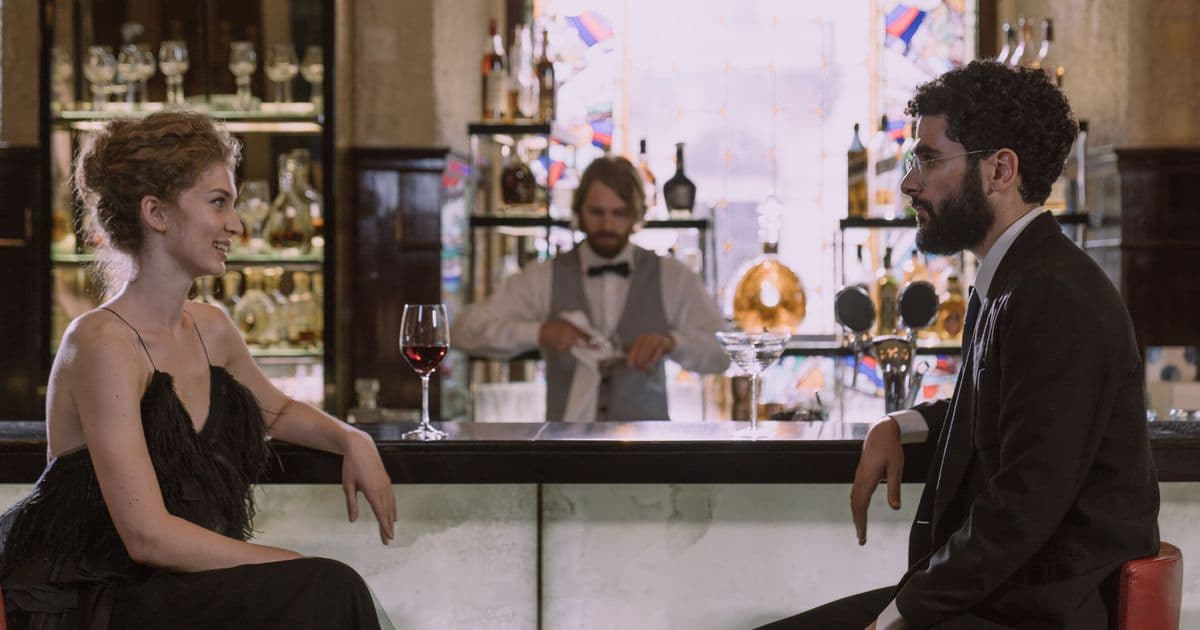
Start with the hotel bars of the Central Business and Warehouse Districts, or coffee on Magazine Street: public, quiet and easy to leave. Daytime is strong here: Audubon Park, City Park and the path along Bayou St. John each give an hour with a built-in ending. In Baton Rouge the lakes do the same, in Lafayette the downtown core.
Two traps deserve names. During Carnival, meeting near a parade route means closed streets, no parking, no rideshare and hours you cannot leave. And a man who wants the Quarter tonight, is staying downtown and flies out Sunday is convention traffic, not an arrangement. Our first sugar date guide covers how a first meeting should be built; then check the parade schedule before you agree to a time, because here the question is not whether you are willing to leave, it is whether the street will let you.
Lagniappe Is the Local Word, and It Is the Right One
Louisiana already has a word for something given freely on top of what was owed, because a relationship exists. Lagniappe is the baker's extra roll and the spoonful nobody asked for, and the entire point of it is that it was never owed. The moment somebody can tell you in advance what the lagniappe will be, it has stopped being lagniappe and become the price of the bread.
That is the local test, and it is a sharper one than any figure could be. A man who arrives with terms has skipped the part where a relationship exists and gone straight to the invoice, which in the state that invented a word for the opposite is a remarkably loud thing to do. What a generous man does here grows out of who two particular people are to each other, it stays between them, and it is not a rate for anything.
The shape it takes is set by the calendar rather than by a bank statement. A gown for a season that genuinely requires one, tickets, a room booked within walking distance of a parade route, a table at a festival, and in July somewhere cooler than this, which is why our weekend getaway guide is worth reading before a first Gulf Coast trip with someone you barely know. Above all of it sits the introduction. Being walked into a room by somebody the room already knows is worth more in Louisiana than anything that can simply be bought, and it is the one thing a stranger cannot fake his way into offering. Lagniappe cannot be requested, but a conversation about what each of you is hoping for can be, and our guide to generosity and expectations is about having it. Have it in autumn rather than in January, because by Twelfth Night everybody's obligations for the season are already spoken for.
Everyone Knows Everyone, Which Makes Privacy a Skill
New Orleans is a large city with a very small social graph. Families have intermarried for generations, the same names run the boards and the balls, and the high school question usually turns up a mutual connection before the drinks arrive. Uptown talks.
Discretion here is not about paperwork or employers. It is about the near certainty that somebody at the next table went to school with somebody. So the local craft is routing rather than secrecy: eat outside his neighborhood and outside yours, which in a city this compact means crossing into Jefferson Parish or over the causeway rather than merely changing streets. Do not tag a Garden District address, and never photograph a ballroom. And be careful which friend you tell, because in this city she will be at the same crawfish boil as his sister in April. If he avoids Magazine Street on a Saturday, that is arithmetic rather than suspicion.
The line, though, is hard and it does not move.
Discretion in Louisiana means keeping a name out of a caption and a ballroom out of your camera roll. It stops at the courthouse door. In a state where marital property is shared by default and fault still counts in a divorce, being asked to hold funds, receive a transfer or shade the truth for somebody is not discretion at all. It is being recruited onto one side of a case.
The ask never announces itself as an ask. It arrives as a favor: an account he cannot touch until a succession clears, a card bought to prove you are serious, money parked with you for a week because the family business is between banks. Louisiana hands that story unusually good props, because successions and forced heirship really do tie estates up here, so the version aimed at you is a costume stitched out of genuine local paperwork. Every one of those props is borrowed, and our guide to sugar dating scams and red flags shows you the bare frame they are hung on. It will be charming, and it is charming precisely because it has to be.

Parishes, the Civil Code and the Line the Law Actually Draws
Louisiana is legally unlike the rest of the country. Its private law descends from French and Spanish civil law rather than English common law, counties are parishes, and forced heirship has no real equivalent elsewhere in the United States. One practical consequence: for a married man here, what he thinks of as his money is often shared property by default, and fault, including adultery, carries weight in a Louisiana divorce. That is a legitimate reason for caution on his side, and never a reason to help anyone conceal anything.
Two adults in Louisiana may date whoever they like, and one of them being generous does not change that. Prostitution and solicitation are illegal here as everywhere, and in New Orleans the enforcement attention sits where the commerce is visible: the Quarter, the blocks around it, and anything that advertises itself.
A sugar relationship is two adults dating where generosity forms part of a real connection. It is not a service and never an exchange of one thing for another. Sugarfar is not an escort service and prohibits offering any service in return for money or other compensation. The Louisiana question is rarely the criminal one anyway, it is the civil one, and both are answered the same way: two people who are genuinely seeing each other, with real dates and expectations said out loud, have nothing for a prosecutor or a spouse's attorney to reframe. Every state around this one arrives at the same criminal line by a different legal route, and our guide to whether sugar dating is legal in the United States walks those routes. This is general information rather than legal advice, and a civil-law state is a poor place to guess, so anything specific belongs with a Louisiana-licensed attorney.
Heat, Water, Crowds: What Actually Goes Wrong Here
Nothing in our US safety guide gets a Louisiana exemption, though two lines of it need translating into local terms. Your own way home has to mean a way home that does not depend on a street being open, which during the season it frequently is not. And the friend who knows where you are needs the cross streets and the parish, because "the Quarter" and "Uptown" are each large enough to be useless to anybody trying to find you. Meet somewhere public, stay in the platform's chat until you have a reason not to, and leave the second something feels off.
Three things here are physical rather than theoretical. Summer heat is a genuine risk on a long outdoor date, and hurricane season brings cancelled plans and closed roads at short notice, so never let your ability to leave depend on someone else's car. Street crime is a real consideration in parts of New Orleans: stay on lit main streets and take a rideshare rather than walking to a car alone late. And drinking outdoors is legal here, which turns a paced evening into a skill and makes an unattended cup a bad idea in a way it is not in states that ban the open container.
The local red flags are worth knowing on sight:
- Krewe royalty he can never be seen with. Claimed membership that produces no invitation, no photograph and no mutual name.
- Anything urgent involving money. A ball invitation that fell through, a shrimp boat that needs a part, a succession that needs a temporary account. None of it gets an answer, and all of it gets reported.
- The offer to collect you because parking is impossible. It genuinely is, during the season. Make your own way anyway.
Questions People Ask About Sugar Dating in Louisiana
Is New Orleans actually good for sugar dating, or is it just tourists?
Both things are true, and they barely overlap. The French Quarter after dark belongs to visitors, conventions and bachelor parties, and that end of the market is loud, transient and mostly a waste of an evening. The local city runs elsewhere: Uptown, the Garden District, Old Metairie, long Friday lunches, hotel bars in the Central Business District, and a Carnival calendar of private balls. Tell the two apart and New Orleans rewards you. Fail to, and you will spend months meeting men who leave on Sunday.
What do Mardi Gras krewes have to do with dating?
A krewe is a private club, not a parade. Members pay dues, the captain runs things quietly, and older organizations still recruit through family. Because so much of New Orleans social life happens inside those clubs, the signal of where a man sits is not his house or his car but what he is invited to between Twelfth Night and Mardi Gras. Old-line balls sell no tickets at all. Super krewe events can be attended if a member brings you. If someone talks about the season vaguely and never mentions a krewe, he is probably newer to the city than he is letting on.
When is the best time of year for sugar dating in Louisiana?
Autumn through Carnival is the strongest run. The city refills after the summer, football weekends and gala season fill the autumn, and Carnival organizing quietly starts under all of it. Twelfth Night through Mardi Gras is intense but logistically difficult, because parade routes close streets for hours. Lent goes quiet, then the spring festival stretch lifts it again. Summer is the dead season: the heat is punishing, hurricane season hangs over everything from early summer to late autumn, and much of the money spends weeks on the Florida panhandle.
Is sugar dating legal in Louisiana?
Two adults in Louisiana may date whoever they choose, and one of them being the generous one does not make it an offense. Prostitution and solicitation are illegal, and in New Orleans enforcement concentrates on the French Quarter and on anything that looks like advertised commercial activity. Louisiana is also the one state whose private law descends from French and Spanish civil law rather than English common law, so inheritance, marital property and fault in divorce follow rules with no exact equivalent in the common-law states around it. This is general information, not legal advice.
How are Baton Rouge and Lafayette different from New Orleans?
Completely different social machinery. Baton Rouge is a capital and a university town, so its calendar is set by the legislative session and by LSU football rather than by krewes, and its wealth leans government-adjacent: lobbyists, lawyers, engineering firms and plant management along the industrial river corridor. Lafayette is Acadiana, where the mood tracks oil and gas services, family and parish run deeper than club membership, and everyone genuinely knows everyone. It has its own Carnival with its own royalty, but it is a smaller, warmer, far less anonymous market.
Before Your First Twelfth Night
There is a version of Louisiana anyone can access on a weekend: a hurricane in a plastic cup, a balcony on Bourbon Street, and it will take your money for as long as you like.
The other Louisiana is not hidden, exactly. It is organized around things that cannot be purchased: a club a family joined generations ago, a card that arrives in January, a table where everyone already knows your high school. You do not get in by spending more. You get in by being brought once, by somebody who belongs, and behaving well enough that it happens again.
Learn the season before you arrive in it. Notice whether the man across the table talks about January, and ask which krewe rather than which car. Keep your own way home, keep his name out of your phone, and understand that the most valuable thing anyone here can give you is not a gift but an introduction. Carnival is the rare social calendar that resets itself completely and then starts again, so the ballroom you were not in this January is holding the same party next January, and the only entry requirement is that you are still here and still worth asking.
Frequently asked questions
Is New Orleans actually good for sugar dating, or is it just tourists?
Both things are true, and they barely overlap. The French Quarter after dark belongs to visitors, conventions and bachelor parties, and that end of the market is loud, transient and mostly a waste of an evening. The local city runs elsewhere: Uptown, the Garden District, Old Metairie, long Friday lunches, hotel bars in the Central Business District, and a Carnival calendar of private balls. Tell the two apart and New Orleans rewards you. Fail to, and you will spend months meeting men who leave on Sunday.
What do Mardi Gras krewes have to do with dating?
A krewe is a private club, not a parade. Members pay dues, the captain runs things quietly, and older organizations still recruit through family. Because so much of New Orleans social life happens inside those clubs, the signal of where a man sits is not his house or his car but what he is invited to between Twelfth Night and Mardi Gras. Old-line balls sell no tickets at all. Super krewe events can be attended if a member brings you. If someone talks about the season vaguely and never mentions a krewe, he is probably newer to the city than he is letting on.
When is the best time of year for sugar dating in Louisiana?
Autumn through Carnival is the strongest run. The city refills after the summer, football weekends and gala season fill the autumn, and Carnival organizing quietly starts under all of it. Twelfth Night through Mardi Gras is intense but logistically difficult, because parade routes close streets for hours. Lent goes quiet, then the spring festival stretch lifts it again. Summer is the dead season: the heat is punishing, hurricane season hangs over everything from early summer to late autumn, and much of the money spends weeks on the Florida panhandle.
Is sugar dating legal in Louisiana?
Two adults in Louisiana may date whoever they choose, and one of them being the generous one does not make it an offense. Prostitution and solicitation are illegal, and in New Orleans enforcement concentrates on the French Quarter and on anything that looks like advertised commercial activity. Louisiana is also the one state whose private law descends from French and Spanish civil law rather than English common law, so inheritance, marital property and fault in divorce follow rules with no exact equivalent in the common-law states around it. This is general information, not legal advice.
How are Baton Rouge and Lafayette different from New Orleans?
Completely different social machinery. Baton Rouge is a capital and a university town, so its calendar is set by the legislative session and by LSU football rather than by krewes, and its wealth leans government-adjacent: lobbyists, lawyers, engineering firms and plant management along the industrial river corridor. Lafayette is Acadiana, where the mood tracks oil and gas services, family and parish run deeper than club membership, and everyone genuinely knows everyone. It has its own Carnival with its own royalty, but it is a smaller, warmer, far less anonymous market.

The Sugarfar editorial team
Every guide on this blog is written and maintained by Sugarfar's own editorial team. We work on the platform every day and update the articles whenever features or rules change.
Ready to try sugar dating?
Create a free profile on Sugarfar and meet like-minded people. It takes less than 2 minutes.
Create free profile